Branquitude, racismo e sexismo em docências realizadas por mulheres negras no ensino de história
DOI:
https://doi.org/10.22481/odeere.v6i01.8535Palavras-chave:
Ensino de História, Branquitude, Racismo, Sexismo, Estágios Curriculares ObrigatóriosResumo
Objetiva-se no texto analisar o ensino de história na formação inicial e continuada, através do estágio docente obrigatório em espaços escolares, tematizando o racismo institucional e o sexismo. O conceito de racismo institucional será interseccionado com o de sexismo, pois a análise destaca fenômenos observados com jovens estudantes negras, licenciandas do Curso de História da Universidade Federal do Rio Grande do Sul (UFRGS). Sob a perspectiva da abordagem qualitativa, consideram-se as práticas pedagógicas, construídas em processos de ensino e pesquisa, desenvolvidas a partir de autorreflexões e entrevistas abertas com estudantes negras em formação inicial. Problematiza-se a presença da branquitude, do sexismo e do racismo nas formas de viver e pensar essas práticas pedagógicas. Fundamenta-se em autoras como bell hooks, Grada Kilomba, Nilma Lino Gomes e Petronilha Beatriz Gonçalves e Silva, em associação com produções do campo específico do ensino de história no Brasil. As considerações parciais apontam a presença hegemônica das maneiras de agir e de pensar da branquitude no imaginário das comunidades escolares e universitárias, produzindo ações de discriminação racial e de gênero.
Downloads
Referências
ALMEIDA, Sílvio Luiz de. O que é Racismo Estrutural? Belo Horizonte: Letramento, 2018.
ALVES, Michele Lopes da S.; EITERER, Carmem Lúcia. O Ser e o Saber na Produção de uma Pedagogia Antirracista no Contexto Escolar: Corporeidade e Identidade Racial de Professoras Negras. In: SEMINÁRIO BRASILEIRO DE ESTUDOS CULTURAIS E EDUCAÇÃO, 8.,; SEMINÁRIO INTERNACIONAL DE ESTUDOS CULTURAIS E EDUCAÇÃO, 5., 2019, Canoas. Anais [...] Canoas: PPGEDU, 2019.
BRASIL. Conselho Nacional de Educação. Parecer CNE/CP n. 003/2004 de 10 de março de 2004. Diretrizes Curriculares Nacionais para a Educação das Relações Étnico-Raciais e para o Ensino de História e Cultura Afro-brasileira e Africana. Diário Oficial da União, Brasília, DF, 19 maio 2004.
CAMISOLÃO, Rita. Cartografia do Acolhimento: escrevivências do estudante negro na UFRGS. 2020. Dissertação (Mestrado em Educação) – Programa de Pós-Graduação em Educação, Universidade Federal do Rio Grande do Sul, Porto Alegre, 2020.
CAVALHEIRO, CAVALLEIRO, Eliane dos Santos. Do silêncio do lar ao silêncio escolar: racismo, preconceito e discriminação na educação infantil. São Paulo: Contexto, 2017.
CÉSAIRE, Aimé. Discurso sobre o colonialismo. Prefácio de Mário de Andrade. Sá da Costa Editora: Lisboa, 1978.
COLLINS, Patricia Hill. Aprendendo com a outsider within: a significação sociológica do pensamento feminista negro. Sociedade e Estado, v. 31, n. 1, p. 99-127, 2016.
FREIRE, Paulo. Pedagogia da Autonomia: saberes necessários a prática educativa. São Paulo: Paz e Terra, 1996.
GOMES, Nilma Lino. Educação, identidade negra e formação de professores/as: um olhar sobre o corpo negro e o cabelo crespo. Educação e pesquisa, v. 29, n. 1, p. 167-182, 2003.
GOMES, Nilma Lino. Relações étnico-raciais, educação e descolonização dos currículos. Currículo sem Fronteiras, v. 12, n. 1, p. 98-109, jan./abr. 2012.
GOMES, Nilma Lino. O movimento Negro Educador: saberes construídos nas lutas por emancipação. Petrópolis: Vozes, 2017.
GONÇALVES, Luiz Alberto Oliveira; SILVA, Petronilha Beatriz Gonçalves e. Movimento Negro e Educação. Revista Brasileira de Educação, n. 15, 2000.
HOBBES, Thomas. Leviatã: matéria, forma e poder de um estado eclesiástico e civil. Brasil: LeBooks Editora, 2019.
hooks, bell. Intelectuais Negras. Revista Estudos Feministas, v. 3, n. 2, p. 454-478, 1995.
hooks, bell. Ensinando a transgredir: a educação como prática da liberdade. São Paulo: Martins Fontes, 2013.
KILOMBA, Grada. Memórias da Plantação – episódios de racismo cotidiano. Rio de Janeiro: Cobogó, 2019.
NÓVOA, Antonio. Vidas de Professores. Porto: Porto Editora, 1996.
PASSOS, Joana Célia dos. Relações raciais, cultura acadêmica e tensionamentos após ações afirmativas. Educação em Revista, v. 31, n. 2, p. 155-182, 2015.
RODRIGUES, Paulo Roberto Grangeiro. Interações entre desconfiança interpessoal e desigualdade econômica no Brasil. Revista Brasileira de Gestão e Desenvolvimento Regional, v. 13, n. 3, 2017.
SANTOS, Jocélio Teles; QUEIROZ, Delcele Mascarenhas. O impacto das cotas na Universidade Federal da Bahia (2004-2012). In: SANTOS, Jocélio Teles (Org.). O impacto das cotas nas universidades brasileiras (2004-2012). Salvador: CEAO, 2013. p. 37-65.
SILVA, Petronilha Beatriz Gonçalves e. Aula Inaugural do Programa de Pós-Graduação em Educação da Universidade Federal do Rio Grande do Sul, Proferida por Petronilha Beatriz Gonçalves E Silva, por Ocasião do Primeiro Edital com Ação Afirmativa. Porto Alegre, 14 ago. 2017.
SODRÉ, Muniz. A ciência do comum: notas para o método comunicacional. Petrópolis: Vozes, 2014.
SODRÉ, Muniz. O negro é um cidadão invisível. Quando ele aparece, a violência aparece também. Observatório da Sociedade Civil, 30 nov. 2020. Disponível em: https://observatoriosc.org.br/noticia/o-negro-e-um-cidadao-invisivel-quando-ele-aparece-a-violencia-aparece-tambem/. Acessado em: 22/03/2021.
SOUZA, Neusa Santos. Tornar-se Negro: as vicissitudes da identidade do negro brasileiro em ascensão social. Rio de Janeiro: Edições Graal, 1983.
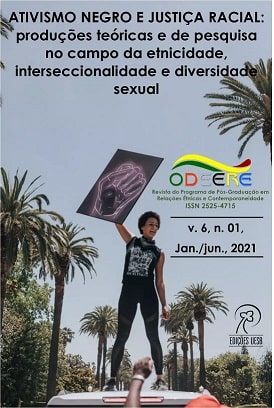
Downloads
Publicado
Como Citar
Edição
Secção
Licença
Direitos de Autor (c) 2021 ODEERE

Este trabalho encontra-se publicado com a Licença Internacional Creative Commons Atribuição 4.0.
Você é livre para:
Compartilhar - copia e redistribui o material em qualquer meio ou formato; Adapte - remixe, transforme e construa a partir do material para qualquer propósito, mesmo comercialmente. Esta licença é aceitável para Obras Culturais Livres. O licenciante não pode revogar essas liberdades, desde que você siga os termos da licença.
Sob os seguintes termos:
Atribuição - você deve dar o crédito apropriado, fornecer um link para a licença e indicar se alguma alteração foi feita. Você pode fazer isso de qualquer maneira razoável, mas não de uma forma que sugira que você ou seu uso seja aprovado pelo licenciante.
Não há restrições adicionais - Você não pode aplicar termos legais ou medidas tecnológicas que restrinjam legalmente outros para fazer qualquer uso permitido pela licença.